

Headaches: Understanding Causes and Relief Options. Headache Treatment in Manasquan, NJ

Discover how Chiropractic, Acupuncture, Massage Therapy, & Braincore Biofeedback help treat recurring headaches.
Headaches are among the most common health complaints, but one important question often goes unanswered: Why are you getting them in the first place?
Some headaches begin in the neck and travel toward the forehead. Others involve throbbing pain, sensitivity to light, hormonal changes, stress, or environmental triggers. Sinus problems, poor sleep, skipped meals, and even a night of drinking can contribute to head pain. Yet many people treat every headache the same way: take a pain reliever and hope it goes away.
Medication can certainly have its place, but when headaches keep returning, understanding what is contributing to them may open the door to additional treatment options. If you are looking for headache treatment in Manasquan NJ, at Stiso Chiropractic, Acupuncture & Massage, we offer four complementary approaches that may help appropriate patients manage headaches: chiropractic care, acupuncture, massage therapy, and neurofeedback. We also use heart rate variability biofeedback to help patients develop skills for regulating their response to stress.
In this guide, we'll explain what happens when you develop a headache, explore common types and causes, and discuss which treatment approaches may be most appropriate for different headache patterns.
1. What Actually Happens When You Have a Headache?
Your head contains a network of nerves, blood vessels, muscles, and other structures that communicate with your brain. When pain-sensitive structures are irritated or certain pain pathways become activated, you experience a headache.
Interestingly, the brain tissue itself does not feel pain in the same way that the surrounding structures do. Headaches can involve the protective membranes surrounding the brain, blood vessels, cranial nerves, muscles, and structures in the neck.
The connection between your neck and your head
Have you ever felt pain begin at the base of your skull and travel toward your forehead or behind your eyes?
The upper neck and head share closely connected nerve pathways. Problems involving the joints, muscles, or other structures in the cervical spine can sometimes produce pain that travels into the head. This is one reason a neck problem can feel like a headache rather than simply neck pain.
Can blood vessels cause headaches?

Yes, blood vessels can play a role in certain headaches, but the explanation is more complicated than a blood vessel simply becoming enlarged and remaining that way. Blood vessels naturally expand and contract to help regulate circulation. The nervous system influences some of these changes, working alongside local mechanisms within the blood vessels themselves.
During migraines, changes in nerve signaling and chemical messengers can contribute to pain and influence blood vessel function. This helps explain why migraines involve more than just changes in blood vessel diameter.
The nervous system also helps regulate muscle activity, pain processing, and the body's response to stress. Understanding these connections is important when considering the different ways headaches develop.
Want to learn more? National Institute of Neurological Disorders and Stroke — Headache Information
2. The Most Common Types of Headaches
Not all headaches feel the same. Recognizing the differences can help you better understand what might be happening and which treatment options are worth exploring.
Tension-type headaches
Tension-type headaches often feel like pressure or tightness around the forehead, temples, or back of the head. You may also notice tightness in your neck and shoulders, particularly after working at a computer, driving for long periods, or dealing with prolonged stress. Muscular tension can contribute to these headaches, although it is not the only possible cause.
Treatment options: Chiropractic care, massage therapy, and acupuncture may help some patients manage tension-type headaches, particularly when muscle tension or neck dysfunction contributes to their symptoms.
Migraines
A migraine is more than an ordinary headache. It is a neurological condition that can cause moderate to severe pain along with other symptoms.
Common symptoms include:
Throbbing or pulsating pain.
Nausea or vomiting.
Sensitivity to light, sound, or smells.
Pain that worsens with physical activity.
Visual disturbances in some people.
Migraines can last for hours or days. Some people experience warning symptoms before the pain begins. Hormonal changes, disrupted sleep, skipped meals, stress, and certain environmental factors may trigger attacks.
Treatment options: Acupuncture has evidence supporting its use in migraine prevention. Chiropractic care and massage therapy may be helpful when neck pain or muscular tension accompanies migraines. Biofeedback may also be useful as part of a prevention strategy. Neurofeedback is an additional approach being studied, although the evidence supporting its direct effects on migraines remains limited.
Cervicogenic headaches: When the problem starts in your neck
The word cervicogenic simply means originating from the neck.
These headaches occur when a problem involving the cervical spine or associated structures produces pain that travels into the head.
Possible clues include:
Pain beginning at the base of the skull.
Discomfort traveling toward the forehead, temple, or behind an eye.
Reduced neck movement.
Headaches aggravated by particular neck positions or movements.
Not every headache accompanied by neck pain is cervicogenic. Migraines can also cause neck discomfort, so a proper evaluation helps distinguish the conditions.
Treatment options: Chiropractic care and targeted massage therapy may be particularly useful when examination identifies a musculoskeletal source. Treatment is selected according to the patient's findings and clinical history.
Cluster headaches
Cluster headaches are less common but can cause exceptionally intense pain, typically around or behind one eye. Attacks may occur repeatedly over weeks or months.
Symptoms can include a watery or red eye, nasal congestion, or a drooping eyelid on the affected side. Cluster headaches have specific treatment options. When this pattern is suspected, an appropriate medical evaluation is important.
Medication-overuse headaches
Sometimes the medications used to relieve headaches can contribute to more frequent headaches when taken too often. This is known as medication-overuse headache.
The risk depends on the medication and how frequently it is used.
If your headaches are becoming more frequent and you find yourself repeatedly reaching for medication, it is worth looking at the overall pattern rather than simply continuing the same routine.
3. What Can Trigger a Headache?
Sometimes the headache itself is only part of the story. Several factors can trigger an attack or make an existing headache condition worse.
Neck problems, posture, and muscle tension
The neck, shoulders, and upper back work together to support your head and allow movement. Prolonged sitting, sustained postures, restricted movement, and muscular overload may contribute to discomfort in these areas.
Some patients experience headaches alongside tightness at the base of the skull or pain between the shoulder blades and spine. When musculoskeletal dysfunction contributes to the symptoms, chiropractic care and massage therapy may help address these problems.
Hormonal changes
Hormonal fluctuations can influence headache patterns, particularly migraines associated with menstruation. Some people notice that their headaches occur at predictable times during their menstrual cycle. Tracking headache frequency and timing can help identify these patterns. Acupuncture may be worth considering as part of a broader strategy for managing recurring migraines.
Stress and poor sleep

Stress can affect muscle tension, sleep quality, and the way the body processes pain. Insufficient sleep can also make some people more susceptible to headaches.
This does not mean the pain is imaginary. Stress and sleep are real physiological factors that can influence symptoms.
Massage therapy may help with associated muscular tension. Acupuncture and heart rate variability biofeedback may help some patients manage stress-related factors. Neurofeedback may be considered when sleep or other associated difficulties are part of the overall picture.
Teeth Grinding and Jaw Clenching (bruxism)
Clenching or grinding your teeth during sleep can strain the jaw muscles and TMJ, contributing to morning headaches, temple pain, and facial soreness. Our office provides treatment for TMJ-related problems and works with local dentists to coordinate care when appropriate.
Allergies and sinus headaches

Pressure around the forehead, cheeks, or eyes is often described as a sinus headache. Sometimes the cause really is sinus inflammation. However, migraines can also produce facial pressure, nasal congestion, and watery eyes. Some people who believe they have sinus headaches may actually be experiencing migraines.
Recognizing the difference matters because the appropriate treatment depends on the cause.
Dehydration, skipped meals, and dietary triggers
Not drinking enough fluids, skipping meals, changing caffeine intake, and certain individual food triggers can contribute to headaches. There is no universal list of foods that causes headaches in everyone. Keeping a simple record of meals, sleep, hydration, and symptoms may help you recognize your own patterns.
Alcohol and hangover headaches
A headache after drinking alcohol can involve several factors, including dehydration, disrupted sleep, and other effects of alcohol on the body. Alcohol can also trigger migraines in susceptible individuals. If you consistently develop headaches after consuming an alcoholic beverage, recognizing that connection may be more helpful than assuming dehydration is the only explanation.
Other contributing factors
Headaches may also be associated with vision problems, medication effects, sensitivity to household cleaners and detergents, and sleep disorders. More than one factor can contribute to the same person's headaches. Someone with migraines, for example, may also have neck stiffness that deserves attention.
The takeaway: Identifying contributing factors helps determine which treatment approaches are most likely to be useful.
4. Which Treatment May Be Best for Your Headaches?
There is no single treatment that works best for every headache. The goal is to understand the headache pattern, recognize contributing factors, and choose an approach suited to the individual.
At Stiso Chiropractic, Acupuncture and Massage, we offer chiropractic care, acupuncture, massage therapy, and neurofeedback. We also use heart rate variability biofeedback as an additional approach to stress regulation.
Chiropractic care: The neck, posture, and nervous system connection
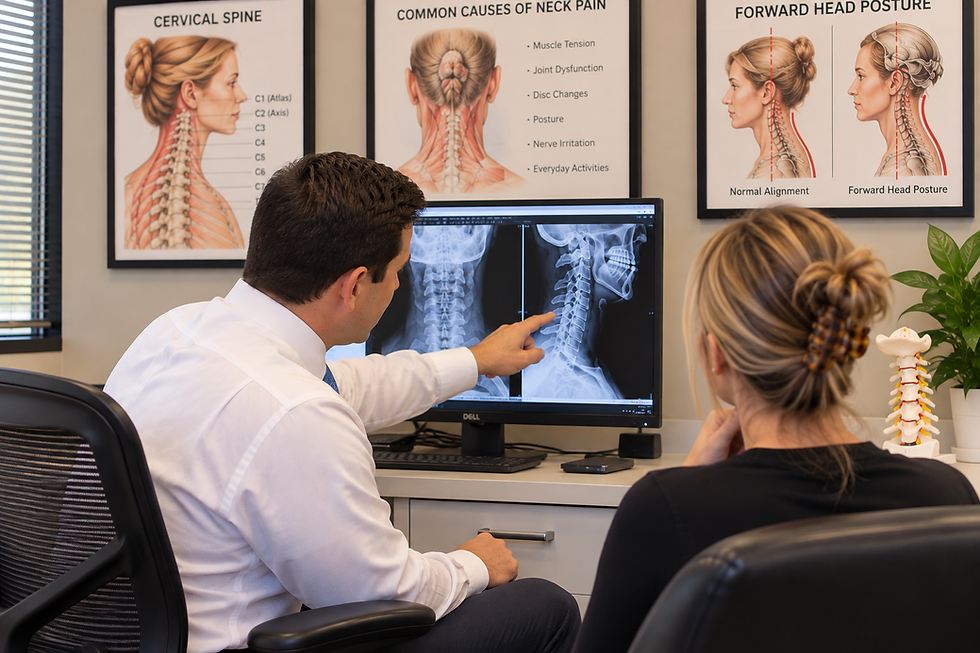
Your neck may have more to do with your headaches than you realize. The upper cervical spine, particularly the first two vertebrae, C1 and C2, plays an important role in head movement and the way the neck communicates with the nervous system. The nerves and pain pathways in this region connect closely with those serving the head. Dysfunction in the upper neck can contribute to headaches that begin at the base of the skull and travel toward the forehead, temples, or behind the eyes.
Modern lifestyles can make the problem worse. Hours spent at a computer or looking down at a phone encourage forward head carriage, sometimes associated with a postural pattern called upper crossed syndrome. This pattern involves changes in the positioning and activity of the head, shoulders, and surrounding muscles.
Forward head posture can place additional strain on the muscles at the back of the neck, including those that attach near the base of the skull. These muscles interact with surrounding connective tissues, and sustained strain may contribute to discomfort, restricted movement, and headaches.
Chiropractic care focuses on evaluating these spinal and musculoskeletal problems. Depending on the findings, treatment may include spinal adjustments, mobilization, and other techniques to improve joint movement and reduce mechanical stress.
The nervous system also helps regulate muscle activity, pain processing, and blood vessel function. Chiropractic treatment may influence aspects of neuromusculoskeletal function, but it has not been established that adjustments directly normalize cerebral blood vessel dilation or correct every neurological cause of headache.
When the neck is part of the problem, treating the neck can be an important part of treating the headache.
Acupuncture: How can tiny needles help?

Many people are surprised to learn that acupuncture has been studied for headaches, particularly migraines and tension-type headaches.
Acupuncture involves inserting very thin needles at specific points on the body. These needles stimulate sensory nerves and tissues, sending signals that interact with the nervous system's natural pain-control mechanisms.
Research suggests acupuncture may influence pain-processing pathways and the release of natural chemical messengers involved in pain regulation. Acupuncture is not simply about placing needles where the pain occurs. Treatment points are selected according to the patient's symptoms, headache pattern, and individual assessment.
Research supports acupuncture as an option for reducing migraine frequency, and it may also help people who experience frequent tension headaches. Acupuncture may be particularly worth considering for recurring headaches when patients want an additional approach to prevention and symptom management. It can also complement chiropractic care or massage when neck and muscle tension accompany the headache.
Acupuncture needles are extremely fine and much thinner than the needles used for injections. Most patients feel little to nothing when the needles are inserted, and some are surprised by how comfortable the treatment is. Needle insertion is typically very shallow, with the depth depending on the treatment area and the individual patient. Many patients find the experience relaxing.
Massage therapy: Relieving tension and supporting recovery
Muscle tension in the neck, shoulders, and upper back can accompany many headaches. Massage therapy addresses these soft tissues directly.

By working with tight and tender muscles, massage may help reduce discomfort, promote relaxation, improve local circulation, and stimulate the body's natural pain-modulating responses, including the release of endorphins. Massage can be particularly useful for people whose headaches occur alongside prolonged computer work, forward head posture, shoulder tension, or discomfort at the base of the skull.
Massage therapy can also complement the other services offered at our office. Chiropractic treatment may address restricted joint movement, while massage works on associated muscular tension. Acupuncture and biofeedback may provide additional approaches to pain management and stress regulation.
Massage is not a stand-alone solution for every headache, but when muscle tension is part of the problem, it can be a valuable component of a broader treatment plan.
Biofeedback: Learning to regulate your body's stress response
Have you ever noticed that your headaches become more frequent when you are stressed, sleeping poorly, or constantly feeling tense? Your body responds to stress in measurable ways. Your heart rate changes, your breathing pattern shifts, and your muscles may tighten without you realizing it.
Biofeedback helps you recognize these responses and practice techniques to regulate them.
During heart rate variability (HRV) biofeedback, a system measures the natural variation in time between heartbeats and provides real-time feedback while you practice breathing and self-regulation techniques.
The goal is to help you develop skills for managing your body's response to stress. Stress can contribute to headache triggers, so learning these skills may help address one part of the overall problem. Research supports biofeedback as an option for managing certain recurring headaches, including migraines and tension-type headaches. Results vary, but it can be a useful addition to a comprehensive headache-management plan.
Neurofeedback: Training the brain's activity
Neurofeedback differs from heart rate variability biofeedback. Rather than focusing on heart rhythm, neurofeedback uses feedback based on brain electrical activity measured with sensors placed on the scalp.
The goal is to help the brain learn to regulate aspects of its activity through repeated training.
Brain activity is often discussed in terms of delta, theta, alpha, and beta waves. These patterns change with factors such as alertness, attention, relaxation, and sleep.
Some research has found differences in brainwave activity among people with migraines. Certain studies have reported increased high-beta activity in specific brain regions, although findings vary and a high-beta reading alone does not establish the cause of a headache. Neurofeedback protocols may be individualized and are often used alongside other treatments or therapies.
The connection between headaches, sleep, and anxiety:
People with chronic headaches may also experience poor sleep, anxiety, or difficulty winding down. These problems can reinforce one another: poor sleep may increase susceptibility to headaches, while recurring headaches can make it harder to sleep.
Neurofeedback may be considered as part of a broader approach when these associated difficulties are present. Heart rate variability biofeedback may also help patients practice self-regulation skills.
Neither approach guarantees headache relief, but addressing contributing factors can be an important part of a comprehensive plan.
Can Chiropractic, Acupuncture, Massage, & Biofeedback be combined?
Yes, depending on the patient's needs and the type of headache involved.
For example:
Someone with headaches associated with neck dysfunction and muscle tension may benefit from chiropractic care and massage therapy.
Someone with recurring migraines may consider acupuncture and biofeedback as part of a prevention strategy.
Someone whose headaches occur alongside sleep difficulties or stress may consider biofeedback or neurofeedback as an additional approach.
The most appropriate combination depends on the individual's symptoms, examination findings, and response to treatment.
The goal is to look beyond the headache itself and address the factors that may be contributing to recurring symptoms.
5. Treating the Cause of Headaches, Not Just the Symptoms.
Headache medications can provide relief, but they don't always address the underlying reason headaches keep returning. For many people, relying on medication alone may mean repeatedly treating the symptoms without identifying and addressing contributing factors such as neck dysfunction, muscle tension, poor posture, stress, or jaw problems.
The goal is to find out why your headaches are occurring, not simply to keep masking the pain. Depending on the type of headache, chiropractic care, acupuncture, massage therapy, and lifestyle changes may help address contributing factors and reduce headache frequency.
Medication remains necessary for some patients, and certain headaches require medical management. However, if you're looking for ways to manage recurring headaches without relying solely on medication, a comprehensive evaluation can help determine whether conservative treatment options may be appropriate for you.
Frequent use of certain headache medications can also contribute to medication-overuse headaches.
If you regularly experience headaches, consider asking:
Are my headaches becoming more frequent?
Do they consistently occur after certain activities or triggers?
Does neck movement affect my symptoms?
Do sleep, stress, or hormonal changes seem to play a role?
Could conservative treatment complement my current plan?
Medication and conservative treatment are not mutually exclusive. Depending on the headache disorder, they may work together as part of an individualized strategy. The goal is to improve your quality of life, reduce the burden of recurring headaches, and help you understand your available options.
6. When Should You Have a Headache Evaluated?
Most headaches are not caused by a life-threatening condition. However, certain symptoms require urgent attention.
A sudden, extremely severe headache, a headache accompanied by new weakness or confusion, fever with a stiff neck, or a headache following significant head trauma requires urgent medical assessment. New or progressively worsening headaches, or a major change in your usual headache pattern, also deserve appropriate evaluation.
Once more serious causes have been ruled out and the headache pattern has been evaluated, conservative care may be an appropriate treatment option. You do not have to assume that recurring headaches are simply something you must live with. Understanding the pattern and addressing contributing factors may open the door to additional options for relief.
Lifestyle Changes That May Help Reduce Chronic Headaches
Professional treatment is only one part of headache management. Everyday habits involving nutrition, sleep, posture, and stress can also influence how often headaches occur and how severe they become. Start with consistent meals, adequate hydration, and a regular sleep schedule. Skipping meals, dehydration, and irregular sleep can trigger headaches in susceptible individuals.
Choose balanced meals with vegetables, fruits, whole grains, lean proteins, and healthy fats. Artificial sweeteners and certain foods may trigger headaches in some people, but reactions vary, so keep a headache diary before eliminating foods unnecessarily. Caffeine can sometimes relieve a headache, but excessive intake or sudden withdrawal can trigger one; aim for consistent, moderate consumption. Reducing or eliminating alcohol may help, particularly if it triggers your headaches.
At night, try sleeping on your back or side with a pillow that keeps your neck comfortably aligned with your spine. Avoid pillows that push your head too far forward or allow it to drop excessively. During the day, position your computer monitor at eye level, keep your shoulders relaxed, support your lower back, and take regular movement breaks rather than holding the same posture for hours. Gentle neck and shoulder mobility exercises may also help when muscular tension contributes to your symptoms.
What about vitamins and supplements?

Certain supplements, including magnesium, riboflavin (vitamin B2), and coenzyme Q10, have evidence supporting their potential role in migraine prevention. The appropriate choice and dosage depend on the individual, and supplements can interact with medications or be unsuitable for certain health conditions. Our office carries IntraMAX, a comprehensive liquid multivitamin and nutritional supplement. Discuss supplements with a qualified healthcare professional before starting them, especially if you take medication or have an existing medical condition.
The bottom line: Small, consistent lifestyle changes can make a meaningful difference for some people with recurring headaches. Tracking your symptoms, identifying personal triggers, and combining healthy habits with appropriate treatment can help you develop a more effective long-term management plan.
Headache Treatment in Manasquan NJ
Headaches can interfere with work, concentration, sleep, exercise, and everyday life. Understanding what may be causing them is an important step toward choosing the right treatment.
At Stiso Chiropractic, Acupuncture & Massage, in Wall, New Jersey, we offer chiropractic care, acupuncture, massage therapy, and neurofeedback, along with heart rate variability biofeedback. Each service has a different role, and the most appropriate approach depends on your individual symptoms and findings.
If you experience recurring headaches, contact our office to discuss whether one or more of these services may be appropriate for you.
To learn more about Chiropractic Care, Acupuncture, Massage Therapy, & Neurofeedback services, call us today to schedule a FREE consultation.

Additional Resources for Patients Who Want to Learn More
This article is intended for educational purposes and does not replace an individualized examination or diagnosis.